
Sound: 

Value: 
(Read about our ratings)
A few years ago, Marshall, the company best known for its legendary guitar amps, surprised us all with a line of headphones and Bluetooth speakers. Many of us assumed this was a cynical, nostalgia-baiting cash grab, but these products proved to be quite good. Most of them performed as well as, if not better than, products from companies that had been in the space for years.
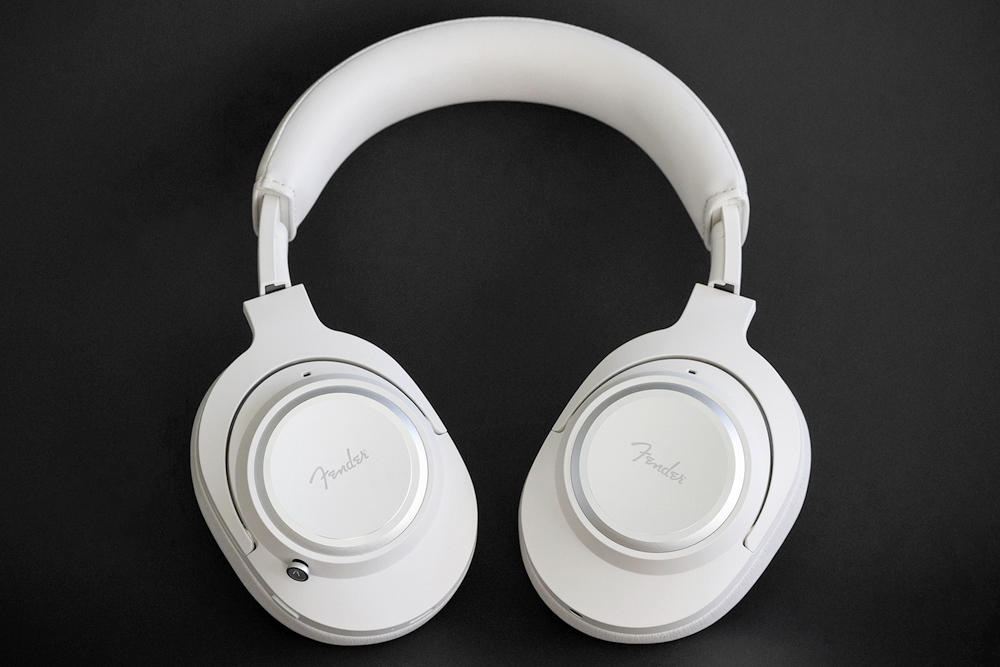
Skip forward to CES 2026, and Fender, the company best known for its legendary guitars, announced its own Bluetooth speakers and headphones. The Mix headphones are noise-canceling over-ears with 40mm drivers, up to 52 hours of playtime, many replaceable parts, and a modular nature that lets you customize colors far more than most headphones.
Priced at US$299 as of this writing in mid-May (prices in other regions TBA), they’ve got some strong competition, but with their interesting features, that’s a decent price. That’s if they sound good, of course.
In the box
With the Mixes, you get a hardshell case, a USB‑C‑to‑USB‑A charging cable, a 3.5mm cable, an airplane adapter, and, most interesting, a wireless transmitter USB dongle so you can avoid the limitations of Bluetooth.
Use
Instead of the near-ubiquitous and usually mediocre voice prompts, beeps, and/or boops, the Mixes play guitar chords to indicate they’re turning on, have paired, and so on. It’s delightful and unique, and it leans into the brand in a way that makes it seem like actual thought went into these—that they’re not just a branding exercise and cash grab.
The Mixes are extremely comfortable, and the smooth plastic and soft memory-foam ear cushions both feel great. At 330g, they’re not as light as some options, but they’re not heavy either.
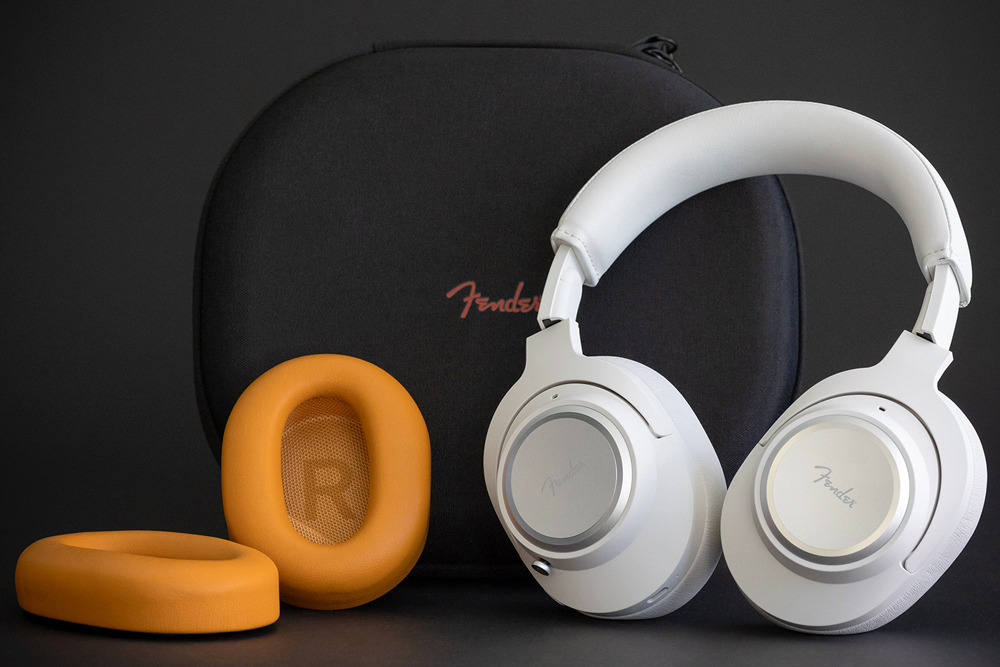
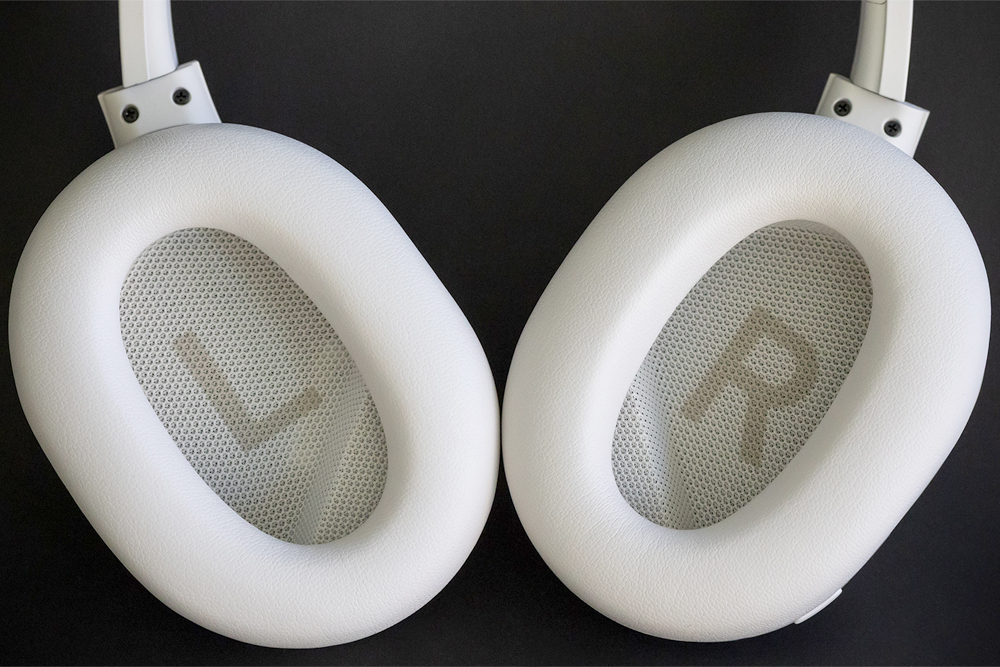
Fender included a second set of earpads with my review sample. The stock white pads certainly matched the Olympic White color of the headphones, but the orange pads they sent look fantastic. These are held on magnetically, so with a light tug you can pop them off to clean or swap in a different set to match your style that day.
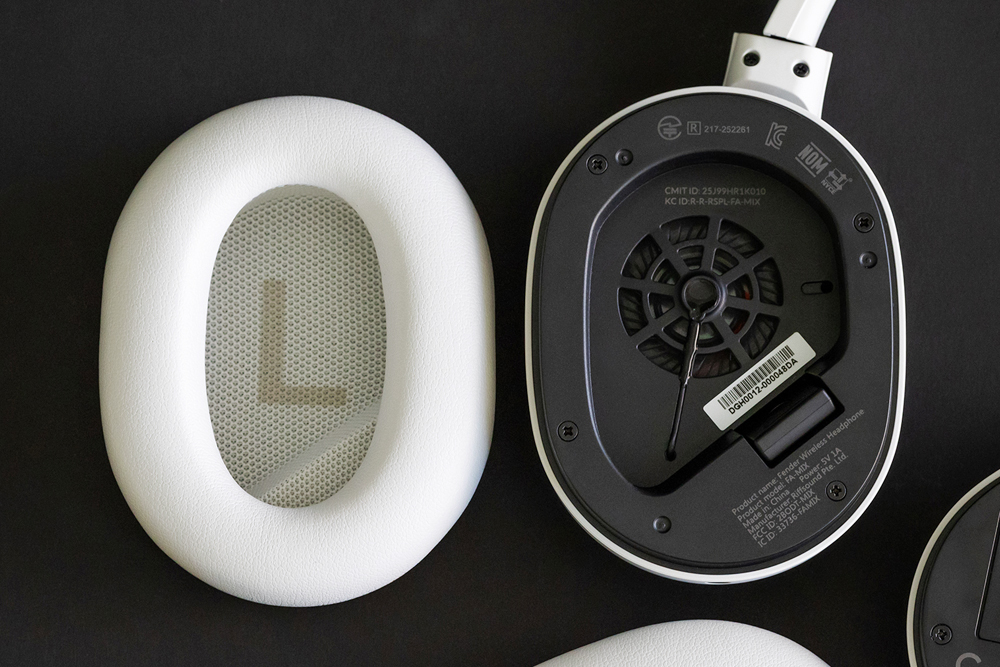
Behind the earcups, Fender has cleverly hidden two interesting features. The left hides the USB-C wireless dongle, ideal for gaming, as its under-20ms latency is far better than Bluetooth. It also allows up to 96kHz/24‑bit lossless audio and Auracast. Because it’s USB‑C, you can connect this to your phone if you want something better than its native Bluetooth codecs. You might need to remove your case for it to connect correctly, however.
Behind the right earcup is the battery. That’s not particularly surprising for Bluetooth headphones, but unlike with many headphones, it’s easily accessible behind a panel you can slide open with your finger. Fender wants you to be able to replace parts that wear with age instead of throwing away the entire device, and that’s certainly rare among electronics manufacturers.
Shockingly, there’s no app. Given that many headphone apps are absolute trash, I’m okay with this. All most apps give you is an EQ, and there are three EQ modes accessible via a button on the right earcup. The Entertainment setting boosts bass and treble, while Voice cuts bass. As we’ll get to, Music mode already has plenty of bass, but for certain genres, the Entertainment setting’s extra punch doesn’t hurt.
Sound
In the Music EQ setting, the Mixes have a fairly well-balanced sound, with some extra bass and a bit of a push in the upper midrange for some zest. They’re easy and pleasing to listen to, and I think most people will like their sound.
I started with the song that inspired me to play guitar, Jimi Hendrix’s “Little Wing,” as covered by Stevie Ray Vaughan (The Sky Is Crying, 24‑bit/44.1kHz ALAC, Sony / Apple Music). Through the Mixes, SRV’s guitar had the pristine, full-bodied, rounded tone you’d expect, while Chris Layton’s drums and Tommy Shannon’s bass gave this song lots of weight. I could clearly hear Stevie’s amp buzzing at points. This is exactly how I’d expect this song to sound on a good pair of headphones.
Up next was “Sultans of Swing” from Dire Straits’ eponymous debut album (16/44.1 ALAC, Warner / Apple Music). Through the Mixes, the drums had a tight snap. There was perhaps more of John Illsley’s bass than was strictly neutral, but it was a fun, bass-friendly sound. Mark Knopfler’s guitar and voice came through strongly, never taking a back seat to the other instruments.
With Bonnie Raitt’s “Something to Talk About” (Luck of the Draw, 16/44.1 ALAC, Capitol / Apple Music), the Mixes delivered an impressively wide soundstage for closed-back headphones. The guitar strums extended out over my shoulders. Not quite as wide as you’d hear with some of the better open-backed headphones, but there was plenty of space to the sound.
In terms of noise canceling, the Mixes do a decent job reducing low-frequency droning sounds like what you’d find on a plane. Their NC is not quite as effective as the best in the category, but it’s better than just a line item on a spec sheet.
Comparison
I didn’t have the latest version of the Sony over-ears to compare to the Mixes, but I did have the older WH‑1000XM5 headphones, which have been among my go-to Bluetooth headphones for years. The XM5s are noticeably lighter than the Mixes, something to keep in mind if you typically have long listening sessions. I found my Sonys a bit more comfortable, but that could be partly due to how broken-in their earcups’ padding is. I cued up “Sheep” from Pink Floyd’s Animals (24/192 ALAC, Sony / Apple Music). The Fenders had more bass, but the Sonys’ bass was tighter. Overall the XM5s were better balanced, with more midrange, but the Fenders were a little more “fun” sounding with slightly more boost in the cymbals and low end.
Next I tried the Sennheiser Momentum 4 headphones, which were slightly more expensive than the Mixes when new but are now the same price. Eric Johnson’s “Cliffs of Dover” (Ah Via Musicom, 16/44.1 ALAC, Capitol / Apple Music) was another favorite of mine in my guitar-playing days. To be clear, a favorite to listen to, not to play. I wish. The Sennheisers and Fenders both accentuated the frequencies around cymbals, but through the Mixes this range was smoother, less crystalline. The Momentums had more high frequencies; the Mixes had more bass but less midrange.
Of these three, I’d say the Sonys and Fenders were fairly close, and I’d reach for either over the Momentum 4s. The Sennheisers’ high end was a bit much for me, but if treble is your thing, you’d probably like them the most. Their noise canceling was by far the weakest of the three, however.
Conclusion
My first guitar was a tobacco-burst Strat Plus I never should have sold. I probably couldn’t play an F chord at this point, but I’ll always have a soft spot in my heart for Fender. When I could play, most of my guitar heroes played Fender Stratocasters. This did not make me predisposed to like the Mixes. The opposite, in fact. If these had been a storied name slapped on a mediocre product, I’d have been livid.
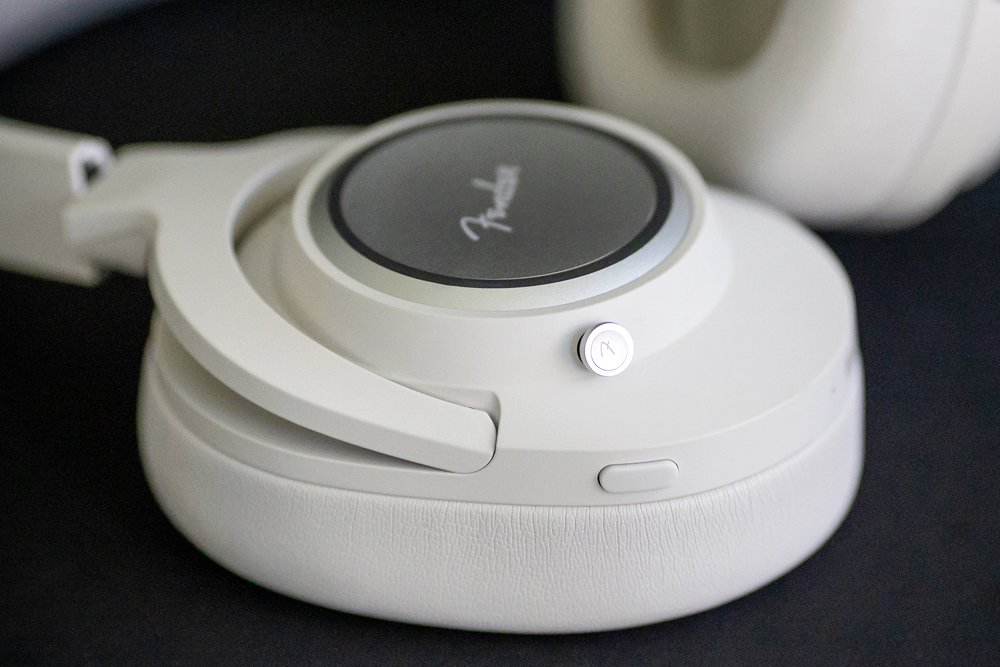
Thankfully, that’s not the case. Fender (actually Riffsound Pte. Ltd., which is licensing the name) has made some great headphones. They sound really good, feel great, and have lots of useful features not found in other headphones. They can pump out some serious bass if you’re looking for that, if you’re a Bassman, so to speak, especially in the Entertainment EQ preset. Even in the Music EQ setting, they’re still “bass friendly.”
Judged purely on sound, there are some better headphones in this price range. Ignore the features, customizability, and replaceability, and these sound like ~$250 headphones. Add in the wireless dongle and swappable/replaceable parts, and I can see how Fender/Riffsound got to the price. Like all things, I wish they were cheaper, but I’d recommend these over a lot of other options given the customizability, user-replaceable parts, and quirky uniqueness. Rock on.
. . . Geoffrey Morrison
Associated Equipment
- Smartphone: Google Pixel 9 Pro
- PC: iBuyPower Windows 11
- Headphones: Sony WH-1000XM5, Sennheiser Momentum 4
Fender Mix headphones
Price: US$299; prices in other regions TBA
Warranty: One year
Riffsound Pte. Ltd. (a licensee of the Fender Audio brand)
5 Harper Road #02-03
Singapore 369673
Email:
Website: www.fenderaudio.com