Sound: 


Value:
(Read about our ratings)
Previously, on SoundStage! Solo: Testing the flagship earbuds from Apple, Bose, and Sony. A few weeks ago, I started this multi-part faceoff with a 12-hour flight to Japan and a real-world test of the comfort and noise canceling of Apple’s AirPods Pro 3, Bose’s second-generation Ultra Earbuds, and Sony’s WF‑1000XM6 earphones. What that story didn’t cover, at least not in any depth, was the sound of each model. Primarily, that’s what this review will cover, as will the upcoming XM6 review, scheduled for May 15.
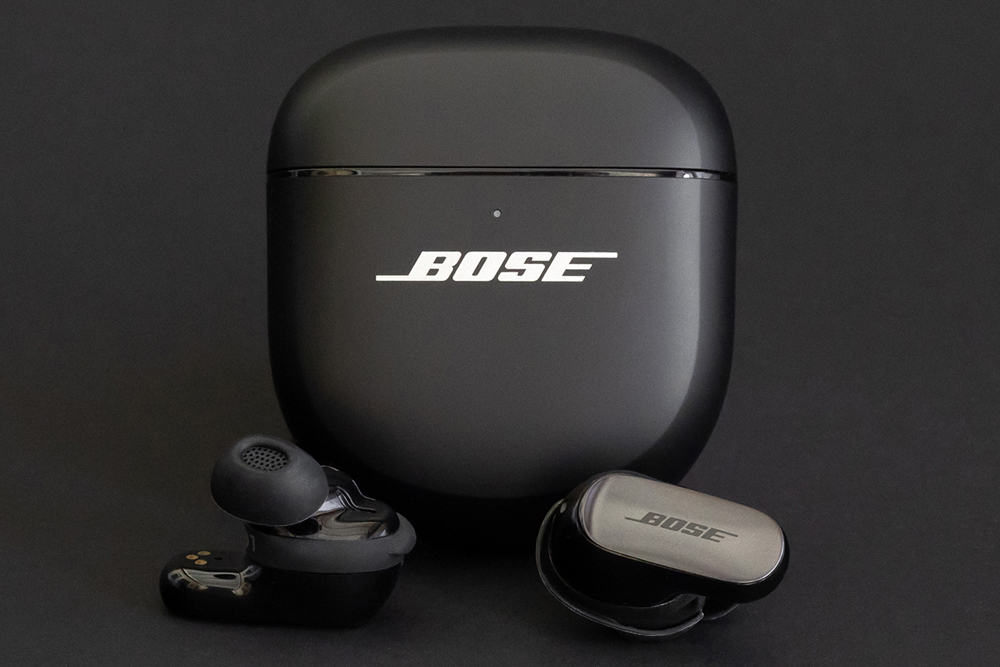
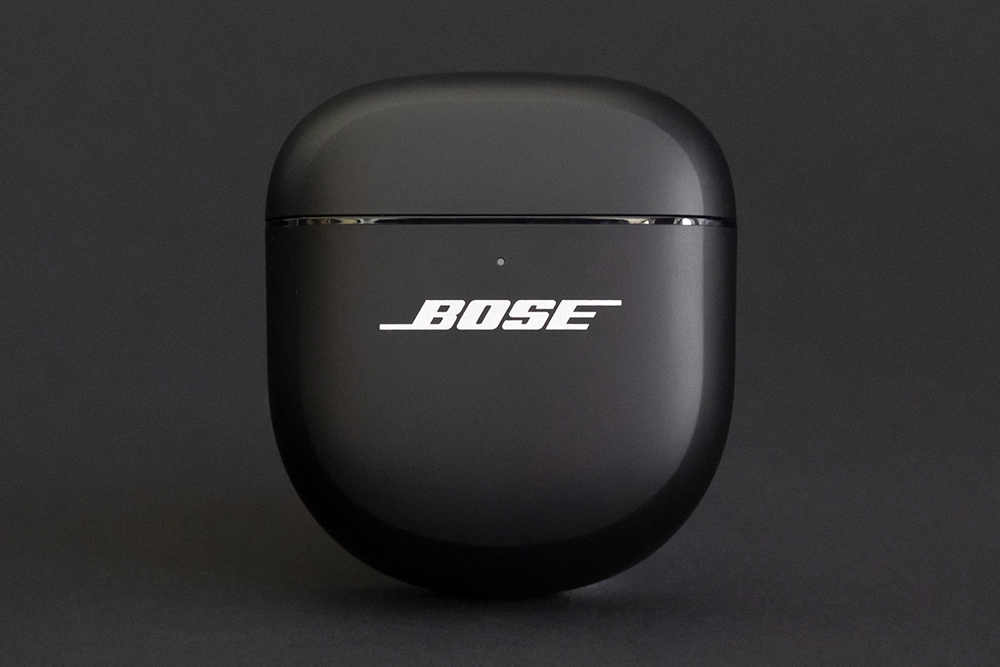
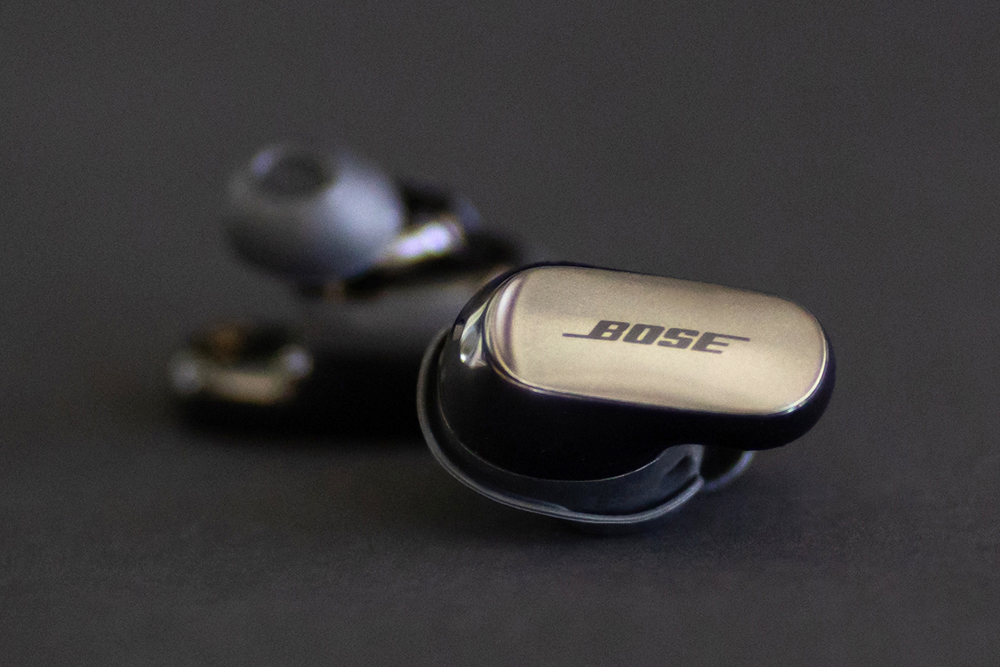
The QuietComfort Ultra Earbuds (2nd Gen) have been updated slightly from their similar-looking predecessors, with some tweaks to the sound, the addition of wireless charging, and some other small updates. At US$299, CA$379, £249, €259 (as of this writing in mid-April), the price is right in between the Sony and Apple options.
In the box
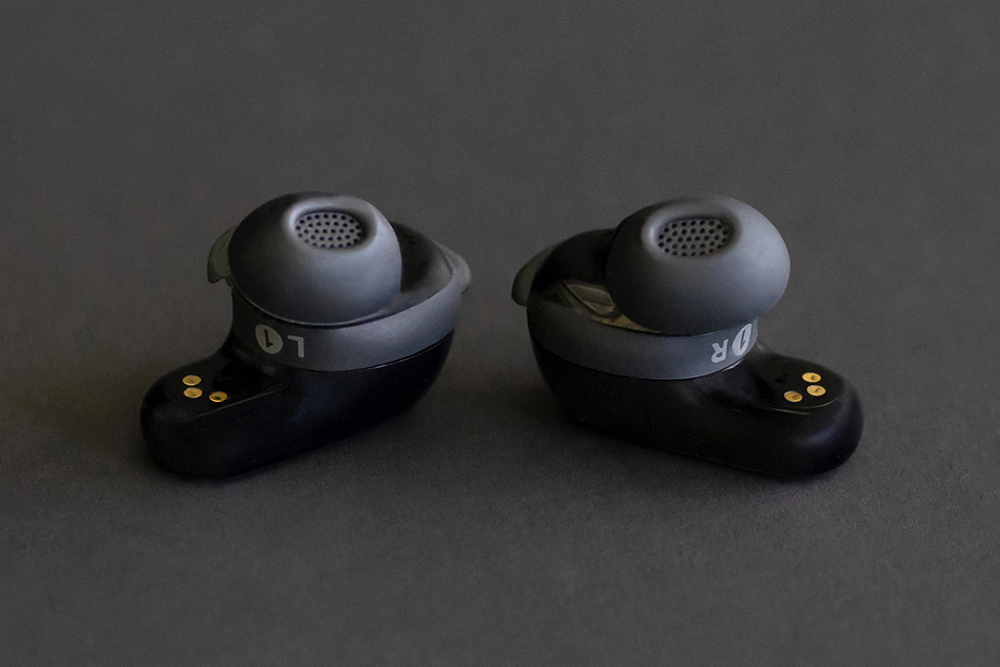
With the earbuds, you get three pairs of silicone eartips and arguably the Ultras’ best feature: three sets of silicone stability band “wings.” You also get a USB‑A‑to‑USB‑C cable.
Use
The stability bands are my favorite part of the Ultras for a good reason: they greatly improve the likelihood you’ll be able to get a secure fit. A good seal to your ears is crucial with all earbuds, for both sound quality and noise-canceling performance. The Sonys rely, arguably too much, on foam eartips that might not work in every ear. The AirPods, with their dangling tails, have their own issues, but the shape of the earbud portions is great for fitting many ears. That said, having the wings gives the Bose ’buds the best and most comfortable fit of all three for my ears—and I assume many others.
While I was able to get them connected to my Pixel 9 Pro smartphone easily enough, connecting to the companion app required a few tries. This has been the case with almost all Bose products I’ve reviewed across multiple Pixel phones, and I’m not sure what the issue is. Once connected, the app lets you choose different modes with different amounts of noise canceling depending on the situation. You can also directly adjust the amount of noise canceling with the Noise Control setting. There’s also a simple three-band equalizer with four presets.
At least to me, the Immersive Audio feature is a bit of a gimmick. In Still mode, it seems like the sound is coming from one direction, regardless of which way you turn your head. Sort of like you’re listening to speakers in a room. I suppose if you’re watching a movie or TV show, this can keep the audio centered, but I’ve never felt that the sound moving with my head was a problem when using headphones. The Motion mode moves the sweet spot with you as you move, which I found rather weird. Both of these modes reduce battery life by 30 percent, so I’d advise against using them.
The noise canceling is excellent, though not quite as epic as that of the Apples and Sonys. More on that in the comparo article.
Sound
The sound of the Ultra 2nd Gens is improved from their predecessors, with a more interesting, exciting tone. There’s crisp treble and a fair amount of bass. They’re still not as impressive-sounding as, say, the AirPods Pro 3s, but they hold their own and aren’t bland like Bose’s previous offerings. They have a boost in the mid-bass and mid-treble regions, giving a sound that’s likely to be fairly popular but not as good as either flatter, more accurate options or more exaggerated options.
Let’s start with my favorite, bass. The Gen 2s have a good amount of bass, similar to many popular earbuds. There was more “boom” than I typically love, in that there was extra bass but it lacked the tight impact of some earbuds. Imagine a bass drum with more “thump” than “thwack.” It also didn’t extend super deep, so when the bass finally drops in “We Found Love” by Rihanna (Talk That Talk, 16‑bit/44.1kHz ALAC, Def Jam / Apple Music), there were plenty of low frequencies, but they didn’t sound as powerful as with some earbuds. If you don’t like bass, these probably aren’t for you. If you do like bass, well, the bass here is fine but not as impactful as with some models.
While there was plenty of treble, there wasn’t much airiness to the sound compared to some earbuds. With the title track of John Coltrane’s Blue Train (24/96 ALAC, Blue Note / Apple Music), Philly Joe Jones’s cymbals were clear and never harsh, but also higher in the mix than they probably should have been. Coltrane’s sax and Lee Morgan’s trumpet didn’t quite have the openness that I’ve heard elsewhere.
The bumps in treble and bass weren’t particularly prevalent, certainly not severe enough to make the midrange disappear, but both male and female vocals tended to take a back seat to the instruments in heavier mixes. With Led Zeppelin’s “Good Times Bad Times” (Led Zeppelin, 24/96 ALAC, Atlantic / Apple Music), Robert Plant was competing, and not winning, against the broad spread of John Bonham’s drums and Jimmy Page’s wailing guitar. It didn’t sound like he was standing behind the rest of the band or anything, just that they were running 10/10 and he was at 9/10.
Comparisons
No surprise that I’m comparing the Ultras to the Pro 3 and XM6 earphones. Up first are the AirPods, which in my initial testing I liked the best out of the three (much to my surprise). The Pro 3s have a lively, exciting sound. They’re not as accurate as the Sonys, but their sound is exceptionally fun. The Boses have more bass, which is saying something, but the Pro 3s have better bass. It extends deeper, giving them a fuller sound overall. With Carly Rae Jepsen’s “Beach House” (The Loneliest Time, 24/48 ALAC, Interscope / Apple Music), the bass hits had better immediacy and attack, while through the Boses there was more bass overall, but it didn’t have the punch of the AirPods.
While still bass-friendly, the Sonys definitely seemed better balanced than both the Apples and the Boses. Their bass didn’t go as deep as that of the AirPods, but it was better controlled than the Boses’. With “Sunrise” by Norah Jones (Feels Like Home, 24/96 ALAC, Blue Note / Apple Music), Lee Alexander’s bass sounded boomier through the Boses. The strums of the guitar were more prominent as well. It all blended better with Jones’s piano and vocals through the Sonys.
Conclusion
My main complaint about the first-generation Ultra Earbuds was that their sound was entirely too bland. Their overly inoffensive nature meant that I doubted anyone hated the sound, but I’d have been surprised if anyone loved it. The Gen 2s go a long way in becoming something that I’d be able to recommend as someone’s only earbuds. They don’t have the punchy liveliness of the AirPods Pro 3s or the incredible noise canceling of the WF‑1000XM6s, but they sound good, have great noise canceling, and are extremely comfortable. As I noted in the introductory article about all three models, that comfort is a big sell. While the Boses trail behind the other two in terms of sound and NC, they’re consistent and still some of the best earbuds you can get. If you have an Android phone and don’t want to deal with the foam fit issues of the Sonys, these are a great alternative.
. . . Geoffrey Morrison
Associated Equipment
- Smartphone: Google Pixel 9 Pro
- PC: Microsoft Surface Pro 8
Bose QuietComfort Ultra Earbuds (2nd Gen)
Price: US$299, CA$379, £249, €259
Warranty: One year
Bose
The Mountain, Framingham, MA 01701
Phone: (508) 879-7330
Email:
Website: www.bose.com