
Bluetooth version 6.0 is here. Well, kinda here. It’s not actually here, but pieces of it are arriving slowly. Let’s just say that it’s rolling out. Announced a few months ago and available in a handful of products right now, Bluetooth 6.0 is the next iteration of everyone’s favorite (by default) low-power, short-distance wireless tech. Unlike new iterations of some other ubiquitous technologies (looking at you, HDMI), this update actually has a lot of useful features.

Not every product will have every new feature. Not every new product will have Bluetooth 6.0. I just wanted to provide an overview of some of the potentially interesting, occasionally available new features you might see on some headphones and other devices in 2026 and beyond.
Auracast
Auracast is not new, but when I met with the members of Bluetooth Special Interest Group (SIG), the standards-setting body behind the tech, at CES 2026, they speculated that 2026 will be the year Auracast breaks through to the mainstream. I hope they’re right because Auracast is a fantastic technology. It isn’t widely known yet, so maybe I’ll do a whole column about it at some point. For now, I wanted to do my part in getting more people up to speed.
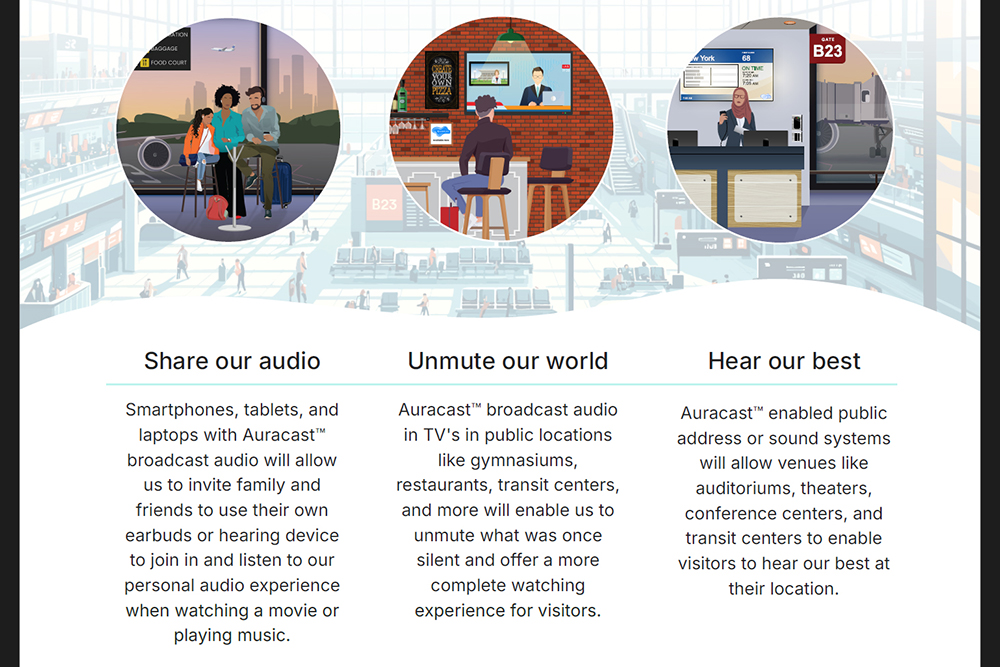
Auracast is basically “group Bluetooth” or “broadcast Bluetooth.” Instead of one source connecting to one or two pairs of headphones, Auracast has one source broadcasting to many headphones. The potential applications are varied and potentially very useful. It fills a niche that doesn’t really exist with any other technology, so it’s not a solution to an obvious problem. Basically, anything you’d normally do with big public-address speakers you could do instead using Auracast to deliver audio to individual earbuds, headphones, and even hearing aids (assuming they have Auracast capabilities). For example, imagine a concert where, instead of speakers, the band broadcasts the signal via Auracast to everyone in attendance through their earbuds.
The current problem is implementation. Auracast should be universal, but many brands are re-naming the tech or otherwise making cross-company interactions difficult. Grumble, grumble, grumble. Hopefully, these speed bumps get flattened this year.
Higher-quality audio
The LC3 codec was supposed to have taken over for SBC as the “default” Bluetooth codec, but it hasn’t exactly taken the headphone world by storm. I don’t see Apple giving up on AAC anytime soon, and if an Android vendor even talks about audio quality, they mention one of the many flavors of aptX.
What’s potentially interesting is that the Bluetooth SIG will be rolling out a way to get more data over the same wireless “pipe.” Called Isochronous Adaptation Layer (ISOAL), it’s a slightly different way to send data over Bluetooth, resulting in a pipe that will be wide enough to theoretically transmit uncompressed CD-quality audio.

Now, I’m the first to point out that changing to lossless or a different codec is not going to create some night-and-day improvement in audio quality. Lossy compression has gotten very good, but broadly speaking, less compression is rarely a bad thing when feasible. We’ll see who supports this out of the gate, and whether it results in any audible improvements. My main concern will be distance and connectivity, because right now, higher-data-rate codecs like LDAC barely work, even if your head is touching your phone while you and it are inside a Faraday cage.
This is something the people at Bluetooth SIG told me they’d have more info on later in the year.
Channel Sounding and Decision-Based Advertising Filtering
I love the delightfully engineering-based names Bluetooth SIG chooses for its tech. What do these two features mean? Dropping a lead anchor in the Strait of Dover? Being able to skip ads on podcasts? Shockingly enough, no.
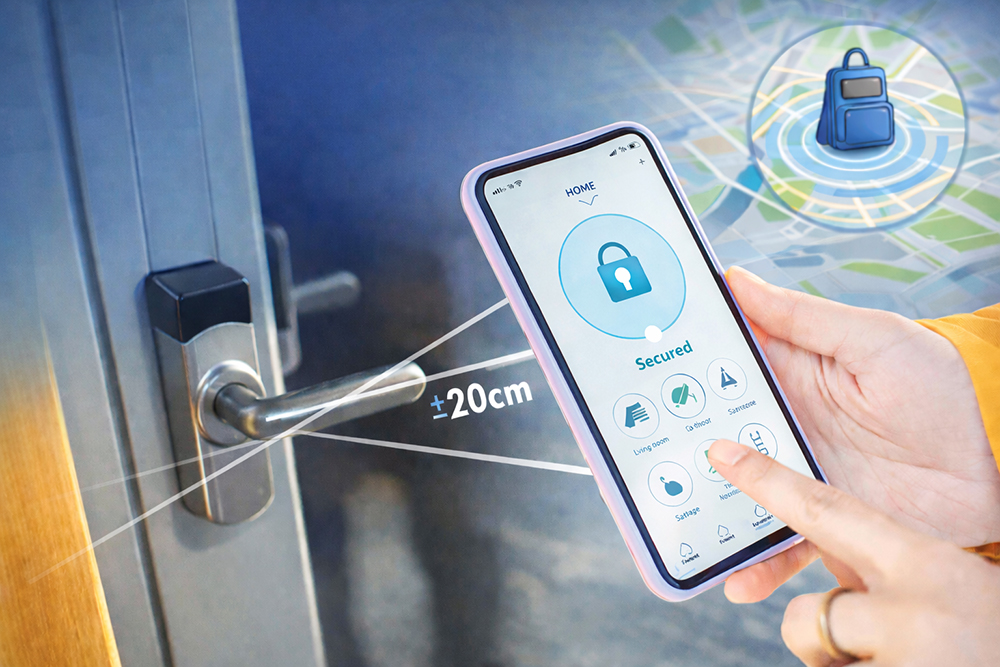
Channel Sounding is a new and potentially more accurate way to determine how far and in what direction devices are from each other. This should help the accuracy of wireless keys/locks, Find My devices, and other Bluetooth trackers. They’re expecting “centimeter-level accuracy,” and with early testing in actual devices, they’re getting within ±20cm (about 8″).
Decision-Based Advertising Filtering is a more efficient way for Bluetooth devices to scan for other devices. This could mean faster pairing and slightly longer battery life. Advertising here means the device is announcing that it’s ready for pairing, like shouting “I’m here!” It has nothing to do with ads trying to sell you something.
When exactly?
Some Bluetooth 6.0 features are already available on a handful of devices, including Google’s Pixel 10, Apple’s iPhone 17, and some Earfun earbuds. I don’t think it’s worth waiting for BT6.0 if you’re in the market for something new right now. Some big-name products that just came out, Sony’s WF‑1000XM6 earbuds for instance, have only BT5.3. Which is to say, this will be a slow rollout, as such changes always are.
. . . Geoffrey Morrison