 Write a comment
Sound: 

Value:
(Read about our ratings)
Where do I start with Focal’s Bathys MG headphones? Actually, that’s the easy part: the price—US$1499, CA$1699, £999, €1199. That places them among the most expensive Bluetooth headphones on the market. They’re several times more expensive than the heaviest hitters in the space: your plebeian Boses, Beats, and Sonys.
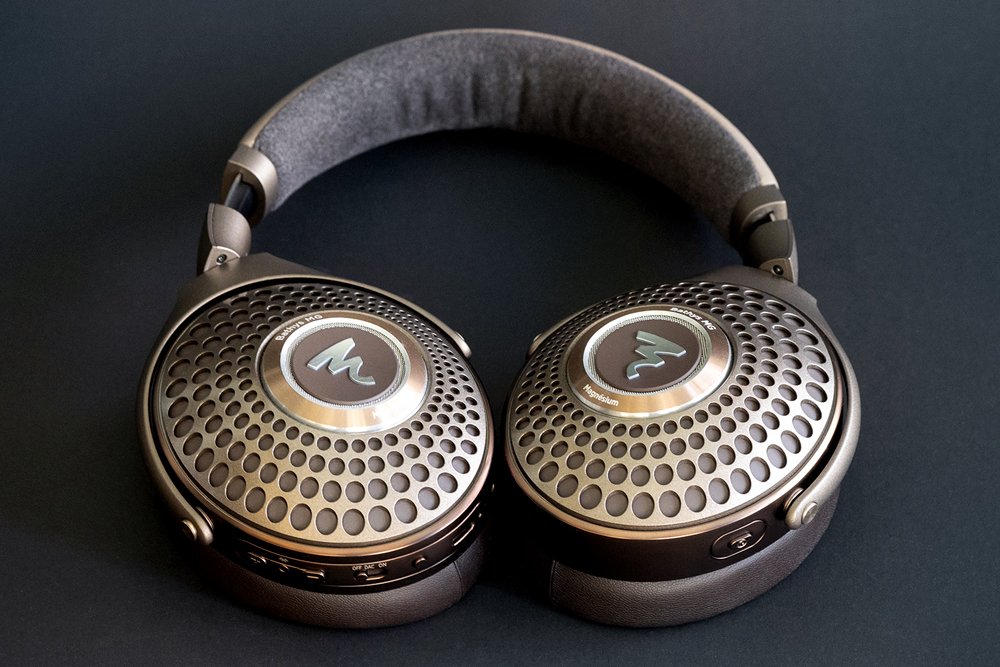
As you’d hope, the Bathys MGs have noise canceling. They also have a big battery, extremely soft earpads, and perhaps most interestingly, a high-end built-in DAC in case you want to ditch the Bluetooth 5.2 and run cabled.
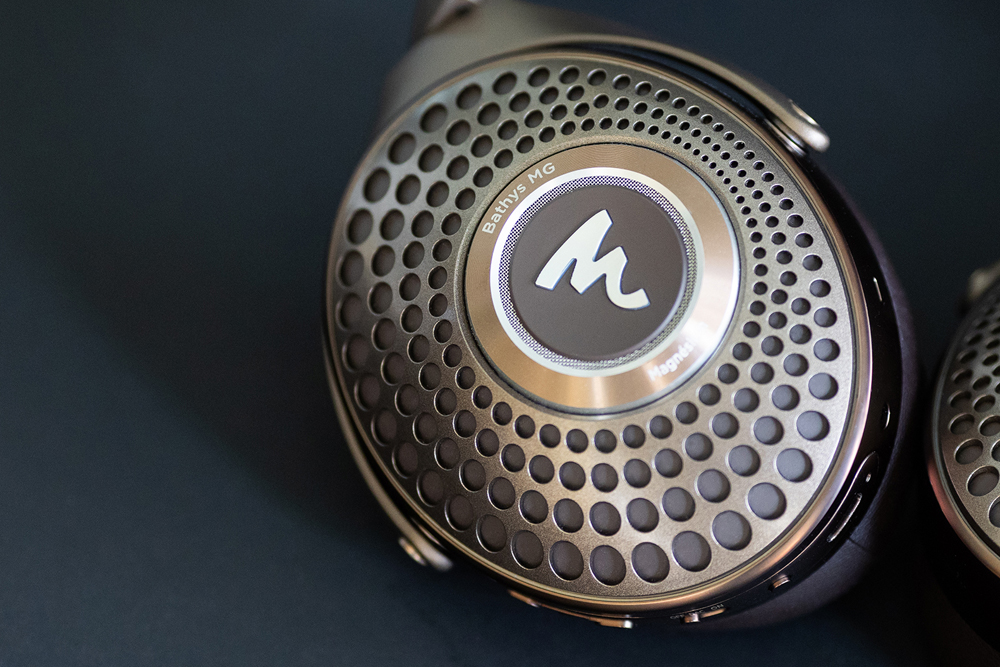
Along with some other upgrades, the headline difference between these and the standard Bathys model (no “MG”) is the switch to magnesium M-profile dome drivers. If you’re unfamiliar with Focal’s offerings, that might surprise you. Unlike most headphones in this price range, the Bathys MGs have dynamic drivers, not planar.
In the box
In the environmentally friendly, bamboo-pulp box, you get two cables: USB‑C and 3.5mm analog. You also get a stylishly brown hardshell carrying case.
Use
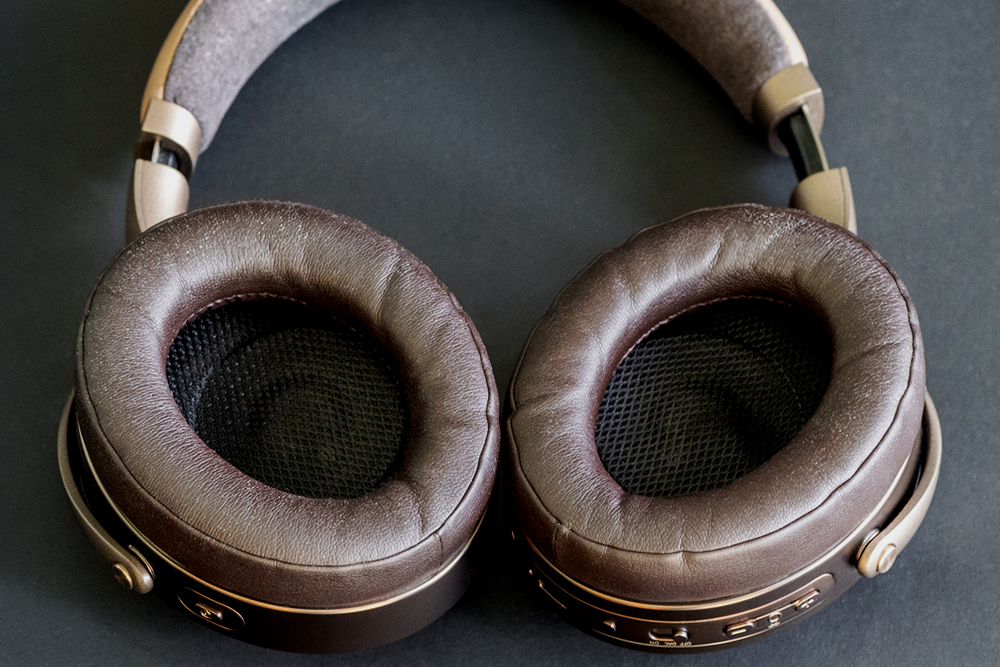
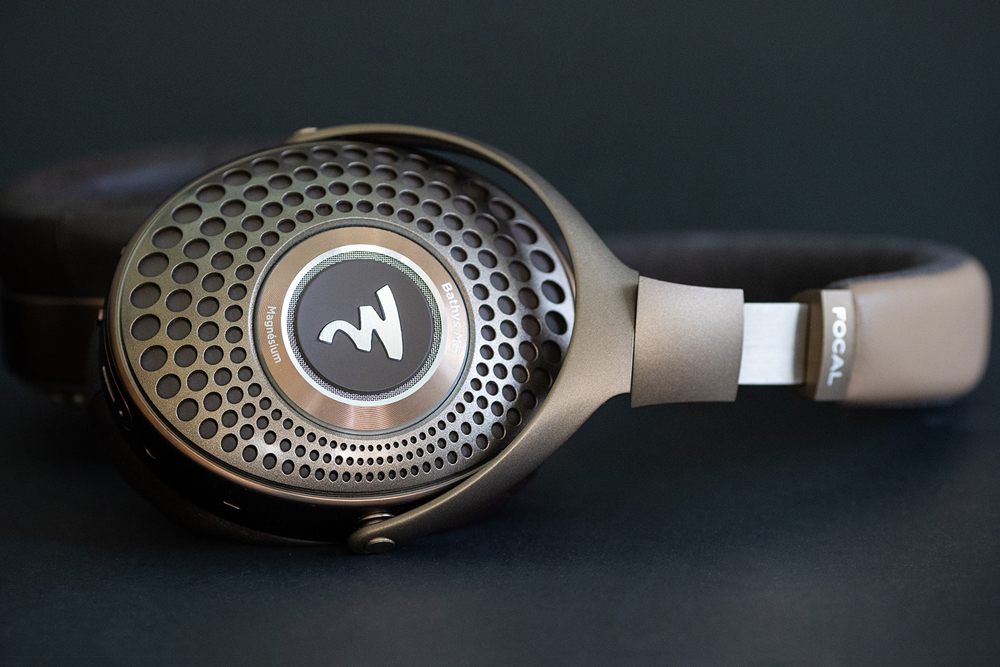
The Bathys MGs are some of the most comfortable headphones I’ve ever tested. The ultrasoft microfiber and leather earcups and headband feel like the coziest of favorite clothing. The MGs aren’t particularly light, weighing in at 350g, roughly halfway between lightweight options like the 254g Sony WH‑1000XM4s and 490g anvils like the Audeze Maxwell headset. That’s likely due to the extensive use of plastic, which feels incongruous with their high-end nature. There are cheaper headphones that feel more substantial and “higher-end.”
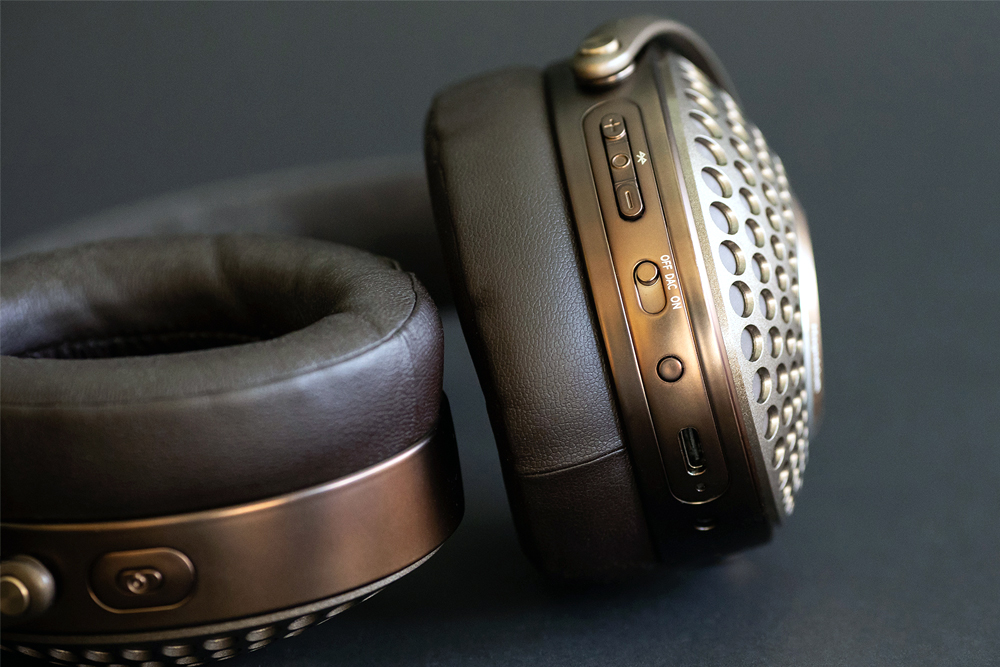
The right earcup has a bevy of buttons. The topmost three are standard playback controls, letting you adjust volume, switch tracks, and so on. Next down is a switch to fully turn the ’phones off (you can enable automatic standby in the app) as well as enter DAC mode. This mode lets you connect to your phone via USB‑C, skipping Bluetooth or any analog conversion until the drivers vibrate. The last button before the USB‑C and 3.5mm inputs lets you activate your phone’s voice assistant. On the left earcup, there’s just a single button that lets you cycle through the three noise-canceling modes.
The Focal/Naim app connected easily to the Bathys MGs. There’s a five-band equalizer with four presets, including Dynamic, which Focal claims to be closest to the Harman target curve. I bounced between that and None—my usual favorite EQ preset. If you want to dive in further, there’s a Mimi Sound Personalization feature that gives you a four-minute hearing test and tunes the sound of the Bathys MGs to your specific ears. Your mileage (or kilometers) may vary. For most people, this feature just boosts the treble a bit.
You can also adjust how bright the logo LEDs are on each earcup—handy if you want to look more cyberpunk or be more visible wandering around. The last setting lets you adjust the noise canceling in three stages, but more on that later.
In a rare touch, there’s a spot in the app that tells you what Bluetooth codec you’re currently using. However, this is less useful than it first appears. First, iOS’s only non-SBC option is AAC. Blame Apple for that one. If you’re on Android, you can usually change the codec in your phone’s settings, but the Bathy MGs have limited options. Surprisingly, given the price, there are only the required SBC, the Apple-desired AAC, and aptX / aptX Adaptive. I don’t think Bluetooth codecs are a big deal, but I would have thought, even to just pad out the features list, a few other codecs would be available, like aptX Lossless. Again, not a huge deal because Bluetooth codecs themselves aren’t a huge deal, more just a surprise for the price.
Battery life is quite good, with a claimed 30 hours when using Bluetooth with noise canceling, 35 hours if you connect analog, and an impressive 42 hours if you connect via USB‑C.
Sound
The overall sound of the Bathys MGs is excellent, with a wide soundstage, well-controlled bass, and smooth highs. I did most of my listening in the None and Dynamic EQ presets, but the Loudness preset adds a bit more bass if you want it. I’m an infamous bass fiend, and I never felt it was needed.
I started with “Golden” by HUNTR/X from the K-Pop Demon Hunters Soundtrack (24-bit/96kHz FLAC, K‑Pop Demon Hunters / Qobuz), which, by the way, is an extremely fun movie. This song, as the name of the movie suggests, is solidly modern electronic K‑pop. The Bathys MGs delivered deep bass that never sounded boomy and maintained lots of punch. Ejae’s impressive vocals were clear and were never overwhelmed by the production.
Switching moods a bit (OK, more than a bit), Bon Iver’s “Speyside” (Sable, Fable, 24/96 FLAC, Jagjaguwar / Qobuz) starts with acoustic guitars, which seemed to sit nicely over my shoulders. For closed-back headphones, these sounded pleasantly expansive. The guitars didn’t quite have the presence and immediate transients you’d get with planar-magnetic drivers, but they had a realistic timbre that many lesser Bluetooth headphones lack. Similar to what I heard with “Golden,” but with far less production, all the instruments seemed well balanced in the overall mix. Perhaps there was a bit more midrange, but it wasn’t excessive.
Not drifting too far, I cued up Gordi’s “Long Way” (Reservoir, 16/44.1 FLAC, Jagjaguwar / Qobuz). The Bathys MGs did a great job maintaining the many layers of this track and conveying the expansiveness it deserves. Gordi’s voice had the crispness that’s part of her sound.
For no particular reason, I don’t use a lot of jazz in my testing—which is odd, since I’ve played more jazz as a musician than any other genre. So next I put on one of the best-selling and most famous jazz pieces of all time: “The Girl from Ipanema” (Getz/Gilberto, 24/192 FLAC, Verve Records / Qobuz). What stood out the most here was the smooth timbre of Tommy Williams’s bass, with even the deepest notes not getting lost or sounding muddled. Stan Getz’s breathy sax sound, as well as João Gilberto’s voice panned hard to the left, blended beautifully with the percussion, guitar, and bass. I’ve heard more open-sounding headphones, but the blend here felt highly accurate and easy to listen to. Easy listening, if you will.
Lastly, in honor of the last of MTV’s music channels going dark a few weeks ago, I put on the Buggles’ “Video Killed the Radio Star” (The Age of Plastic, 16/44.1 FLAC, Island Records / Qobuz). I don’t think I’ve ever heard this song on any kind of high-end audio. There are a lot of layers, which never sounded mushed together like when I’ve usually heard this track. Cranking up the volume, the Bathy MGs were able to produce louder-than-you-should-listen sound, though not as loud as, say, wired headphones with a good amp.
The noise canceling is quite good, cutting out a decent amount of low-frequency sounds as well as some lower-midrange. I wouldn’t say it’s the best I’ve heard (not heard?), but it’s at least in the ballpark of the best options. Enough so that you wouldn’t need one of those options just for a relaxing flight. There are three settings to the noise canceling. Transparency lets in ambient sound so you can talk to your neighbor or the flight attendant. Soft and Silent are basically “low” and “high” amounts of noise canceling.
Conclusion
So are the Focal Bathys MGs the best-sounding Bluetooth headphones? Probably, but at what cost? US$1500—that’s what cost. Maybe you’re reading this and you can’t understand what I’m on about. Maybe spending $1500 on Bluetooth headphones wouldn’t even cause a noticeable blip on your credit-card statement. But I have to consider value in a review like this, and as good as the Bathys MGs are, they’re not four times better than other Bluetooth headphones. When the battery inevitably dies (and like all lithium batteries, it’s a question of when, not if), these become nothing more than attractive decorations on your headphone wall/stand/desk until you fix the problem. However, the battery is a serviceable part, and Focal keeps them in stock.
So if US$1500 is a lot of money for you, I don’t think you should aspire to the Focal Bathys MGs. If you’ve lost that much in the couch cushions of your ski palace in Gstaad, go for it. I’m sure you’ll be the envy of everyone at your jet-rental terminal.
. . . Geoffrey Morrison
Associated Equipment
- Smartphone: Google Pixel 9 Pro
- DAP: HiBy R4 x Evangelion
- DAC-amplifier: Schiit Audio Magni
Focal Bathys MG headphones
Price: US$1499, CA$1699, £999, €1199
Warranty: Three years, parts and labor
Focal
BP 374, 108 rue de l’Avenir
42353 La Talaudière Cedex
France
Phone: +33 477-43-57-00
Website: www.focal.com
Focal Naim America
313 rue Marion
Repentigny, QC J5Z 4W8
Canada
Phone: 1-800-663-9352