
Sound: 

Value: 
(Read about our ratings)
 Last year, I reviewed Stax’s current flagship headphone model, the SR‑X9000 (US$6200, CA$8199, £5195, €7250), and came away quite impressed. The SR‑X9000 is an evolution of the SR‑Omega design, which debuted in the early 1990s. The Omega-series headphones are characterized by large, circular diaphragms and commensurately large earcups. Since then, Stax has updated the other model in their Omega series. The new SR‑007S headphones are said to have incorporated some improvements taken from the SR‑X9000s. At a much more manageable price of US$2390, CA$2999, £2495, or €3000, how do they compare to the performance of the flagship model?
Design
Electrostatic headphones differ from most other headphones on the market in that, rather than using magnetic forces to drive a diaphragm with an attached voice coil, they feature a charged diaphragm suspended between two electrode grids and driven directly by electrostatic forces. The primary advantage to this design is that the diaphragm can be made lighter than in a more typical dynamic driver, which potentially leads to better transient performance and lower distortion. Of course, the realization of any theoretical advantages is dependent on implementation, but with a more-than-60-year history of producing electrostatic headphones—or earspeakers, as they like to call them—Stax is in a good position to turn theory into practice.
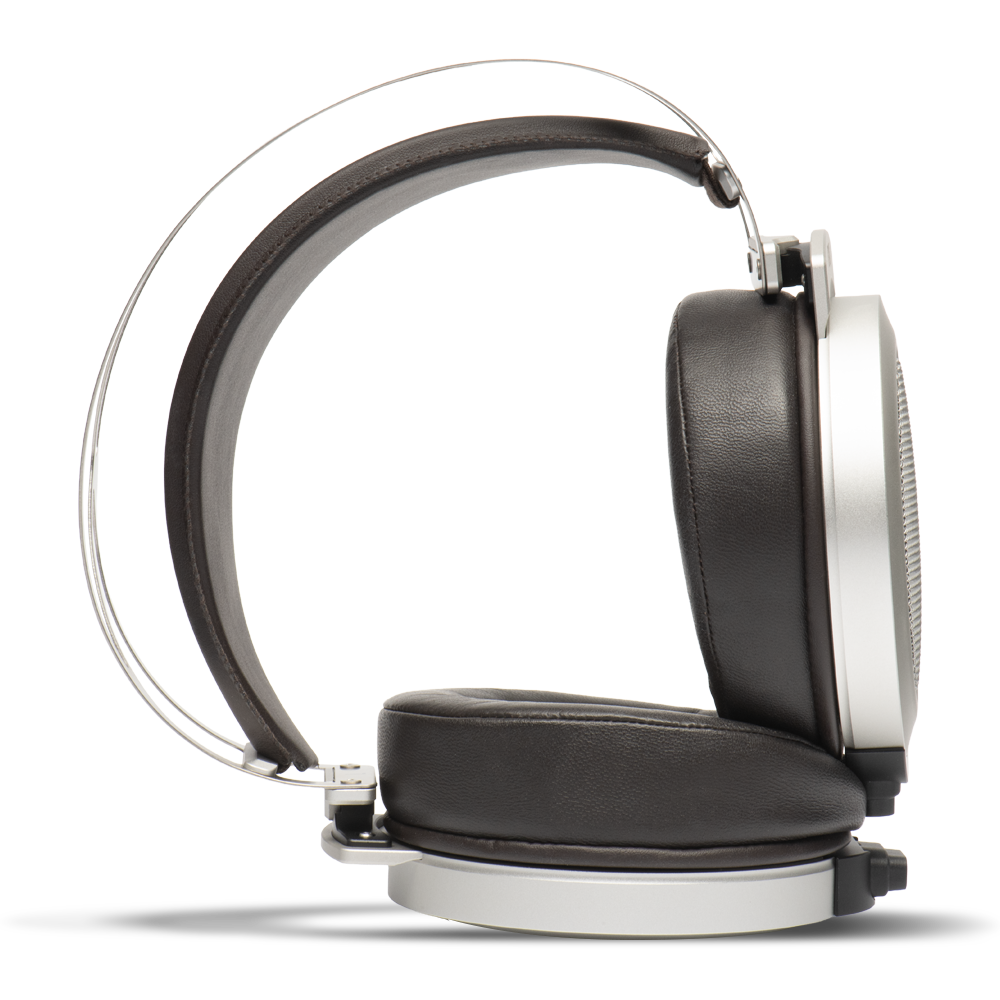
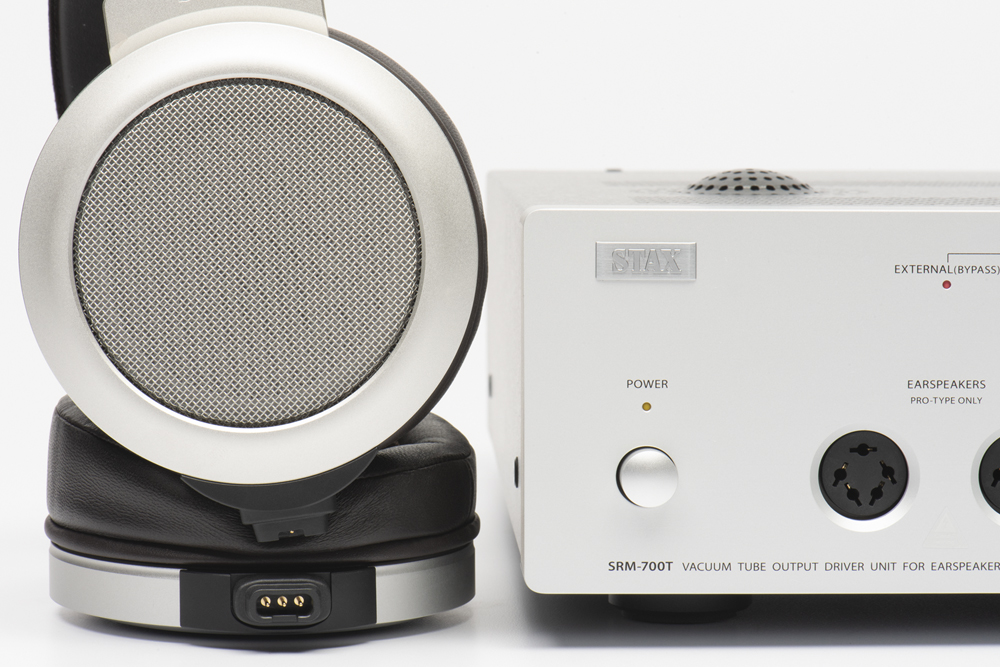
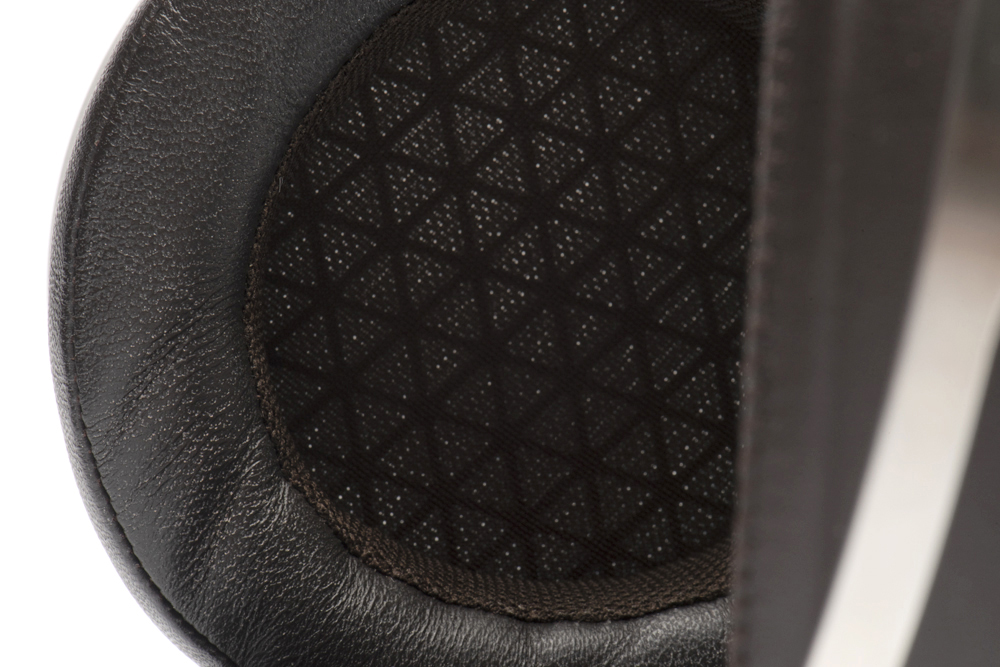
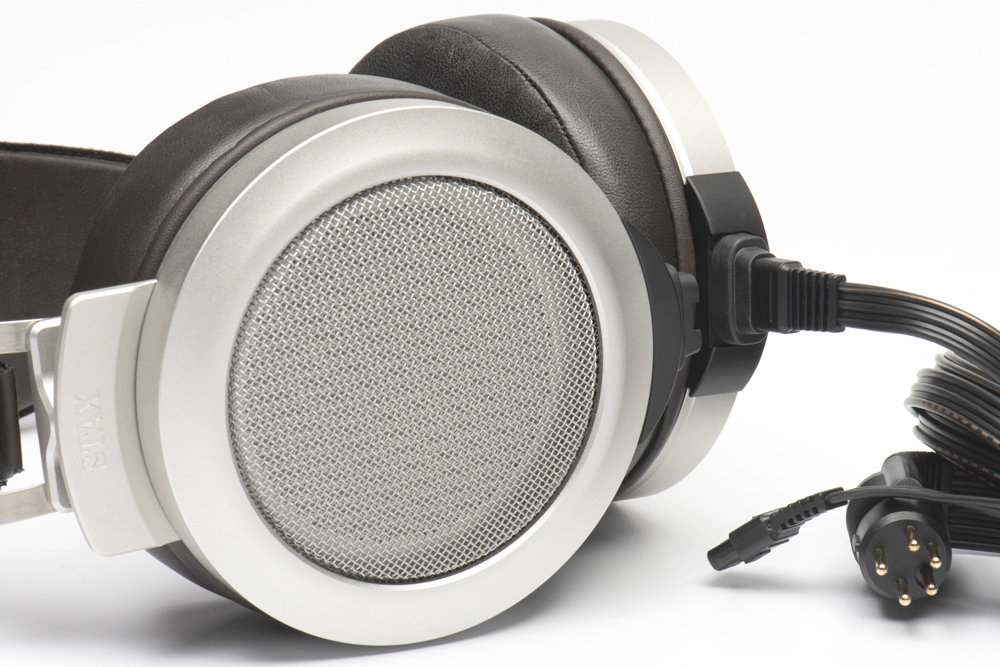
The SR‑007Ses are full-sized circumaural headphones, but with earcups that are less enormous than those on the SR‑X9000s. They had no difficulty accommodating my average-sized adult male ears, and the earpads, which are sheepskin on the part that touches your face, made contact around their full circumference rather than hanging below my jaw as they had on the SR‑X9000s. The earcups had enough depth that my ears didn’t rub against the fabric that covers the drivers, but those with significantly larger ears may still find them a cozy fit.
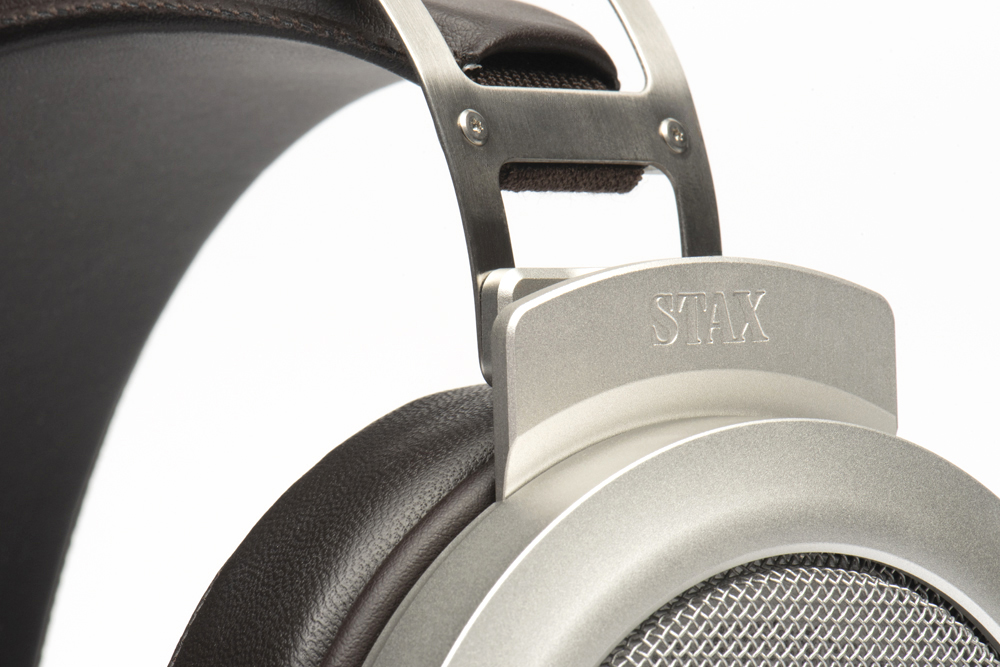
The earcups seem to be constructed primarily of aluminum, but the plate of the arc assembly, which Stax calls the anti-resonance structure (ARS), is stainless steel for increased rigidity. There are cutouts in the plate, presumably in an effort to reduce weight and disrupt resonances as much as for aesthetic considerations. The soft, well-padded band that sits below the plate provides ample cushioning, and Stax says that it is self-adjusting. While the 430g that Stax specifies for the headphones’ weight isn’t exceptionally light, I and everyone else who tried the SR‑007Ses during the review period found them very comfortable.
Stax doesn’t give many details on the improvements made to the new SR‑007S design as compared to the previous SR‑007A model. The size of the individual holes in the electrodes has been reduced by 20 percent and their number increased. Stax claims that this change increases airflow and makes for a smoother sound. Earcup resonance has been reduced, and the inside portion of the earpads has been designed to absorb more acoustic energy, which Stax says leads to a more expansive and precise soundstage. Electrical specifications are similar to those of other Stax headphones: capacitance is 110pF, impedance is 145k ohms, and bias voltage is 580VDC. Frequency response is 6Hz–41kHz, and the sensitivity is 101dB.
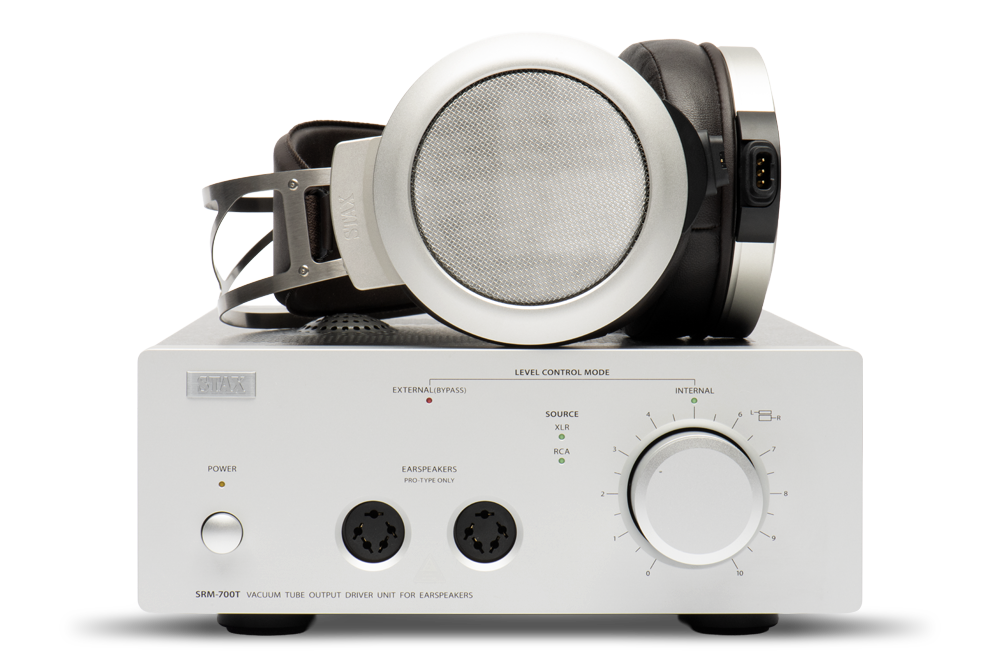
Because electrostatic headphones operate using a different principle than most other headphones, they require a special kind of amplifier that can deliver the necessary bias voltage and wide voltage swings. To drive the SR‑007Ses, Stax sent along the SRM‑700T fully balanced hybrid amplifier (US$3400, CA$4499, £2895, €3950). The SRM‑700T measures 4.1″H × 9.4″W × 15.5″D and weighs 12.75 pounds. It uses a solid-state input stage with hand-selected matching FETs and an output stage comprising two 6SN7 vacuum tubes. Like the SRM-T8000 I previously reviewed, the volume-control knob on the SRM‑700T is divided into two parts: the forward portion controls the left channel, and the rear portion controls the right channel. They generally turn together, but can be turned separately to adjust balance. There is also a switch on the back panel to bypass the volume control when using a source with an adjustable output level. Two pairs of headphones can be powered simultaneously, and the amp supplies the standard 580VDC Stax Pro bias voltage. Around back, the amplifier has one pair of balanced inputs (XLR) and one pair of unbalanced inputs (RCA). The switch to select between them is located on the back panel as well. There is also a single pair of unbalanced outputs (RCA) that pass through the unbalanced input; they are not affected by the SRM‑700T’s volume control or any of its circuitry.
In the box
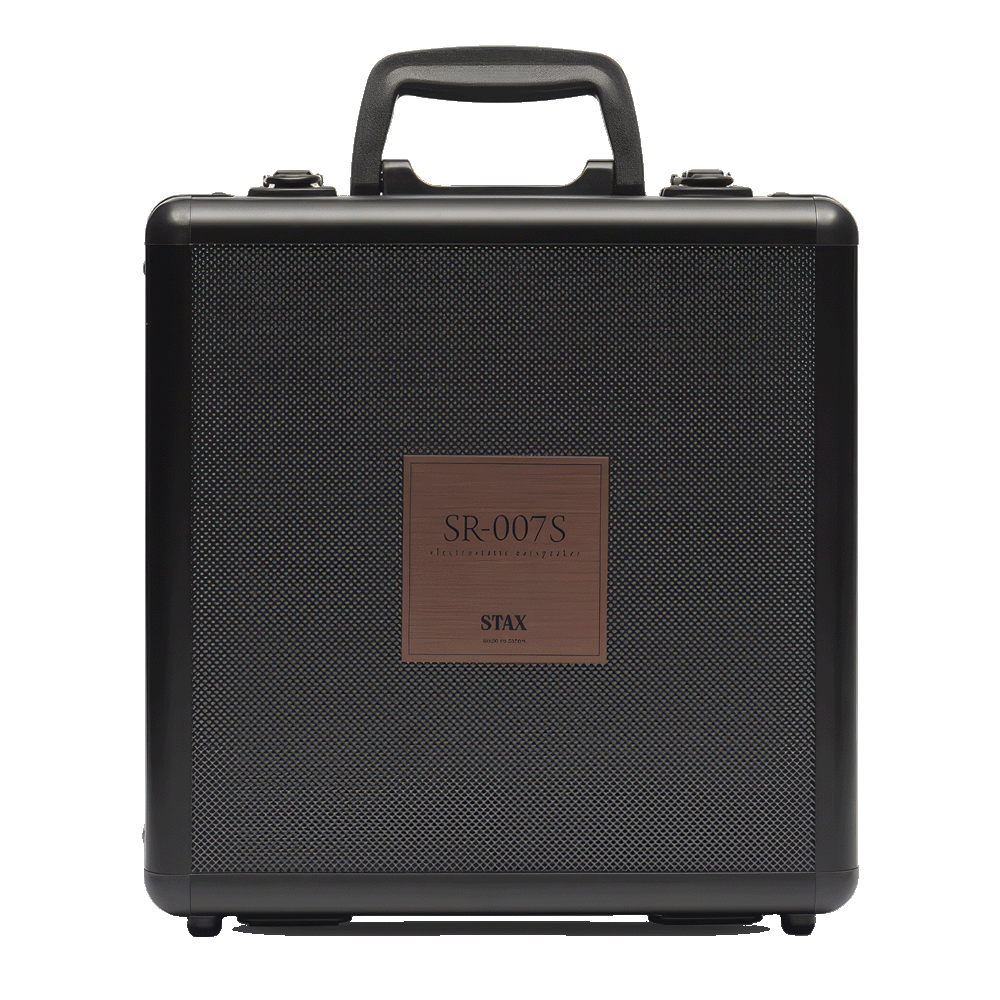
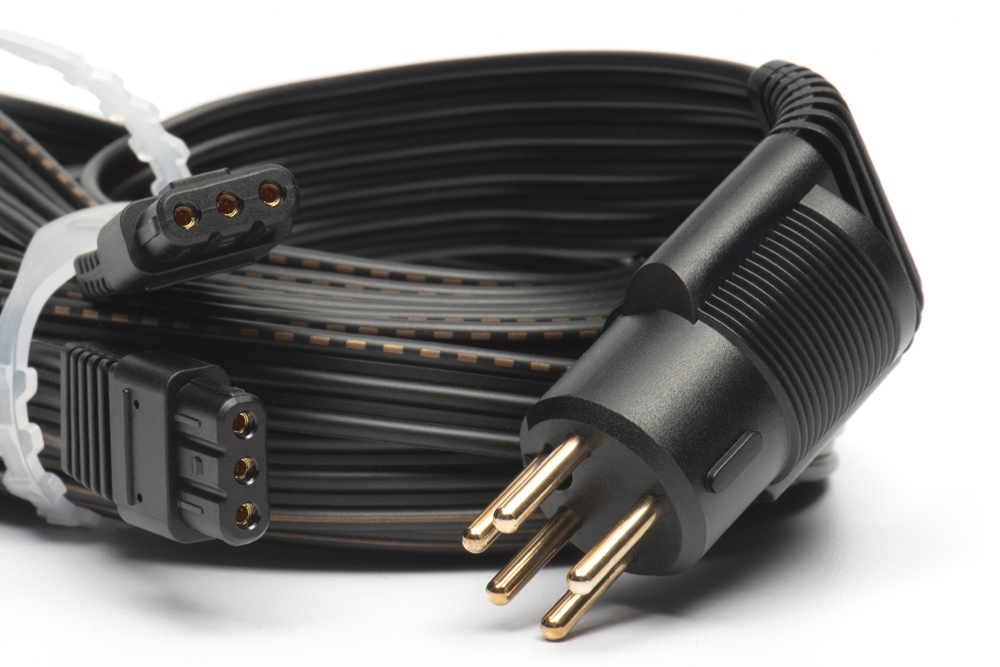
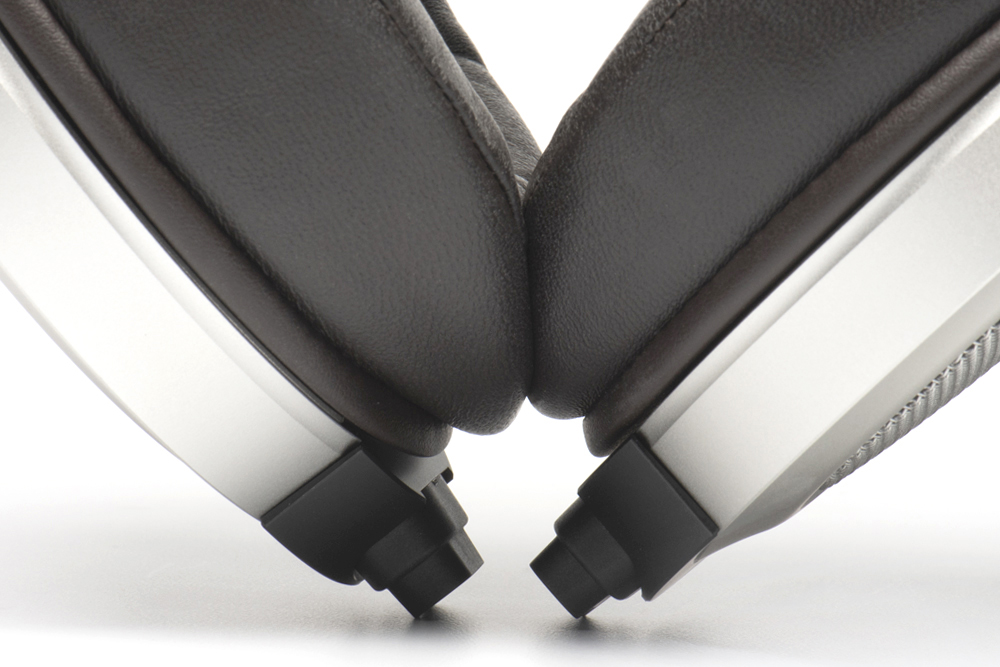
The SR‑007Ses come in a rigid travel/storage case that seems to be constructed from hard plastic and aluminum. The cutouts inside the case securely cradle the headphones and provide a place for the detachable 2.5m (8′) cable. The only other thing in the box is an instruction manual. The SRM‑700T’s box includes an instruction manual, a generic pair of RCA cables, and a power cord.
In use
I primarily used the SR‑007Ses with the SRM‑700T amplifier, but since the amp arrived slightly later than the headphones, I also spent some time listening to them driven by my Woo Audio GES all-vacuum-tube amplifier. The sound provided by the GES was warmer, slightly rolled off at the top, softer in the bass, and less detailed, but still highly enjoyable. All of the following listening notes refer to driving the SR‑007Ses with the SRM‑700T. Sources were my Ayre Acoustics C-5xeMP universal disc player connected via DH Labs Revelation balanced interconnects and my Grace Design m900 DAC–headphone amplifier connected via QED Silver Spiral unbalanced interconnects. The Grace was plugged into my Lenovo ThinkStation computer running Windows 11, which served up my digital music library using Foobar2000 and streamed content from Tidal. The SRM‑700T protects the tubes with a soft-start sequence that takes 20 seconds to warm up before allowing signal flow. As with most gear, I felt it sounded best when left to warm up for at least half an hour.
Sound
Listening to the same Minnesota Orchestra recording of Beethoven’s Symphony No. 5 conducted by Osmo Vänskä (SACD, BIS Records BIS‑SACD‑1416) that I used in my evaluation of the SR‑X9000 headphones, I found the SR‑007Ses to have a more neutral tonal balance than their pricier counterparts. While overall they still showed a preference for the midrange—bringing forward the upper strings and woodwinds—individual instruments sounded closer to their true timbres. In my review of the SR‑X9000s, I noted that the bassoon, which has a few exposed parts in the third movement, had a bit too much reediness compared to the tonal body of the notes; the SR‑007Ses got the proportions correct. When the cellos and basses enter with their jaunty run at about 1:45 in the same movement, there was great texture to the strings, but also enough body to support it. Although I would’ve liked to hear a bit more of the basses, I appreciated how incredibly clean they sounded, with the individual notes clearly discernible and possessing a lively, bouncy feel.
Beyond the frequency contour of reduced bass and prominent midrange, I did note some extra treble energy that put a subtle sheen on upper woodwinds and gave brass instruments a little added brilliance, as if their bells were made of a slightly thinner metal than usual. These artifacts weren’t off-putting, though, and my observation should be understood as a slight editorializing on what was generally a natural-sounding midrange. To hear how these eccentricities would fare with a less neutrally balanced recording, I put on Valery Gergiev’s recording of Rimsky-Korsakov’s Sheherazade with the Kirov Orchestra (CD, Philips 289 470 840‑2). Played through loudspeakers or headphones generally regarded as neutral, both the upper strings and brass come across a little too aggressively in this recording—especially in the louder sections. The SR‑007Ses certainly let me hear those foibles, but didn’t exacerbate them to the point of rendering the recording unlistenable, as can sometimes happen when recording and transducer have similar vices.
Turning to jazz, I pulled out another recording that I used in my review of the SR‑X9000s: Diana Krall’s Live in Paris (CD, Verve 4400652522). On track 3, “’Deed I Do,” there was enough of John Clayton’s upright bass to balance the rest of the group; in fact, unlike with the basses on the Beethoven recording, I didn’t wish for any more. Anthony Wilson’s guitar was wonderfully articulate, with a good blend of attack and note body, and Krall’s piano was well balanced from top to bottom. Krall’s voice had a touch of extra sibilance, but Jeff Hamilton’s brushwork on the snare sounded like brushes, not static, so whatever high-frequency peak the SR‑007Ses may have in their response is likely narrow.
Another jazz album I played through the SR‑007Ses was Count Basie’s Chairman of the Board (CD, Roulette Jazz 7243 5 81664 2 2). This is one of those early stereo recordings with three distinct islands of sound. On “Speaking of Sounds,” I heard the woodwinds in the left earcup, the brass in the right earcup, and the rhythm section in the center, not quite out in front of me but definitely toward the front of my head. Each of those islands portrayed the instruments along with a distinct ambience that was more open than I’ve heard through other headphones—although I hadn’t played this recording through the SR‑X9000s. More interesting was hearing the reverb of the trumpet solo in the right image, then fractionally delayed in the center image. The level of clarity with which the SR‑007Ses rendered these details made me curious about exactly how the microphones had been set up and what the recording engineers may have been using as a reverb chamber.
To assess how a component handles a dense non-classical recording, I usually use Derek and the Dominos’ Layla and Other Assorted Love Songs. But having recently been introduced to Leonard Cohen’s album Death of a Ladies’ Man (24‑bit/96kHz FLAC, Sony Music Entertainment / Tidal) after reading Joseph Taylor’s “Curator” article on Cohen, I wanted to hear how the SR‑007Ses would deal with Phil Spector’s wall-of-sound production. I still found the soundscape overly busy, but the Stax headphones did a much better job of excavating Cohen’s voice from its sonic surroundings than did my usual reference Audeze LCD‑X headphones or my stereo system. And, on “Memories,” they did more to bring out the saxophone solo, including carving out a separate acoustic space with its own reverb characteristics. If you want to hear how a recording was put together, few headphones will give you more insight than the SR‑007Ses.
Bass performance is always an area of concern with electrostatic headphones. The SR‑007Ses definitely prioritize tunefulness and articulation over bass quantity. As I’ve already said, I found they had enough bass for some recordings, and I wanted a little more on others. To challenge them with a truly heavy bass track, I put on Kendrick Lamar’s “DNA” (Damn, 16/44.1 FLAC, Aftermath/Interscope (Top Dawg Entertainment) / Tidal). The bass on this track is intentionally distorted, and it was an interesting experience to hear the crystal-clear rendering of that distortion without the overwhelming quantity of bass that normally accompanies it. This is bass you’re meant to feel as well as hear, even through headphones, but I wasn’t quite feeling it through the SR‑007Ses. If that physical sensation of bass is important to you, the SR‑007Ses probably won’t satisfy.
Comparisons
Throughout this review I’ve been comparing the SR‑007S headphones to the SR‑X9000 model. Many times, I found myself preferring the SR‑007Ses—primarily because their frequency balance is closer to neutral—but there are some ways in which I was more impressed by the SR‑X9000s.
As detailed as the SR‑007Ses sounded, the SR‑X9000s brought out even more fine detail in recordings. The slightest intake of a singer’s breath, the subtle movements of fingers on guitar strings, and the clacking of saxophone keys were all highlighted by the SR‑X9000s. This is due, at least in part, to their tipped-up treble response, but it rarely sounded entirely unnatural. There are many audiophiles for whom detail is king. Few of them would be disappointed in the sound of the SR‑007Ses, but they would positively revel in the sound of the SR‑X9000s.
The SR‑007Ses do soundstaging better than most headphones, but the SR‑X9000s produce an acoustic envelope that is simultaneously larger, more open, and more specific. In my review of them, I wrote about how I felt I could wander through the orchestra on the Beethoven recording. The SR‑007Ses brought me into the hall, where I could hear the relative positions of the orchestral sections, but they didn’t bring me up on stage the way the SR‑X9000s had. On José Carreras’s recording of Ariel Ramirez’s Misa Criolla (CD, Philips 420 955‑2), the choir was laid out wonderfully by the SR‑007Ses, but when I had listened through the SR‑X9000s, I felt almost as though I could go up to the individual choir members. Either pair of headphones can transport you into the recording space, but the SR‑X9000s are something special in this regard.
The two headphone models portray bass slightly differently from each other. Based on my recollection and listening notes, the SR‑X9000s’ frequency extension reaches deeper, whereas the SR‑007Ses may have a little more energy in the 80–100Hz region. That, and the relative reduction in treble energy vis-à-vis the SR‑X9000s, made the SR‑007Ses sound bassier both as a matter of overall balance and in giving a punchier sound to electric basses and kick drums. Neither pair of headphones will satisfy bassheads, though.
I also compared the SR‑007Ses with the Audeze LCD‑X planar-magnetic headphones (US$1199). Of course, I could not drive the Audezes with the same amp as the SR‑007Ses, so I used a Grace Design m902 connected to the Ayre via the same set of balanced cables when spinning discs and plugged the Audezes directly into the Grace m900 when playing music from my computer. The Audezes have a denser, weightier sound than the SR‑007Ses. On the Beethoven album, this manifested in a larger contribution of the bass instruments to the orchestra’s sound, which I think is a more accurate representation of this recording. On Live in Paris, Clayton’s bass was fuller, but not overdone, and Krall’s voice had a little less sibilance. On “DNA,” I started to feel the electric bass through the Audezes where I hadn’t with the SR‑007Ses, making it a more satisfying listen for me, although I think many people who gravitate toward this type of music will still want more. The SR‑007Ses countered with better bass articulation, tone, and texture, though the Audezes were certainly not lacking in these qualities.
Soundstaging wasn’t radically different between these two pairs of headphones, but the SR‑007Ses were a little better. Their sound was a little more open, the acoustic space a little wider, and the center image, while still not out in front of me, was pushed more towards the front of my head. And, although the images were larger, they were simultaneously more precise, with more specific placement of sound sources from left to right, better layering from front to back, and greater differentiation between instruments and background acoustics.
The Audezes are clear and detailed compared to most conventional headphones, and even compared to many other planar-magnetic designs, but they can’t match the SR‑007Ses in that regard. This is something I heard across all of the music I played in this comparison, but one clear example (pun intended) was the exposed drum-set intro on “Now He Sings, Now He Sobs (Live)” from the Chick Corea Trio’s Trilogy (Deluxe Edition) (24/96 FLAC, Chick Corea Productions, Inc. / Tidal). From the shimmer of the cymbals to the rasp of the snare drum to the strike of the beater against the kick drum’s head, through the SR‑007Ses, I felt like I was right there hearing the real thing, whereas the Audezes were slightly smoothed-out in comparison.
Conclusion
The SR‑007S is the fourth electrostatic headphone model I’ve reviewed, and all four have impressed me with senses of transparency, clarity, openness, and effortlessness that are qualitatively different from what I’ve experienced with all other headphones. While in some ways I felt that they were outperformed by the flagship SR‑X9000 model, their more neutral tonal balance and compact dimensions may actually be preferable for many listeners. Considering they cost less than half of what the flagships do, I think they represent the sweet spot in the Stax headphone range. If you are curious about what electrostatic headphones have to offer, the SR‑007Ses are the ones to audition.
. . . S. Andrea Sundaram
Associated Equipment
- Headphones: Stax SR‑X9000, Audeze LCD‑X
- Headphone amplifiers: Stax SRM‑700T, Woo Audio GES, Grace Design m900, Grace Design m902
- Digital sources: Ayre C‑5xeMP, Grace Design m900
- Interconnects: DH Labs Revelation, QED Silver Spiral
Stax SR‑007S headphones
Price: US$2390, CA$2999, £2495, €3000
Warranty: One year, repair or replacement
Stax International
Room 2101, 21st floor, The L. Plaza,
367-375 Queen’s Road,
Central - Hong Kong
Phone: +852 2522 6989
Fax: +852 2522 1989
Email:
Website: www.staxheadphones.com